
- News
- City News
- chennai News
- Cruelty towards chickens continues in hatcheries: PETA
Trending
This story is from November 29, 2022
Cruelty towards chickens continues in hatcheries: PETA
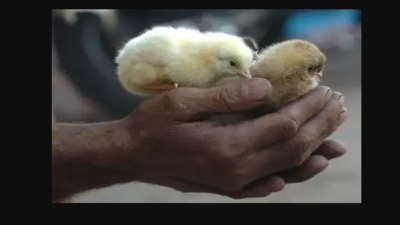
Representative image
A team of investigators visited hatcheries in Andhra Pradesh, Maharashtra, Tamil Nadu, Telangana and Uttar Pradesh from October 2021 to May 2022 and filmed and documented the cruel treatment and horrific deaths that chicks in these industries are subjected to.

That’s why PETA India as well as other animal welfare organisations are not only calling for such cruel practices to be banned and the culprits brought to book, but also urging people to turn to vegan alternatives.
Hatcheries typically place eggs in incubators powered by electricity, which can cause chicks to be born with organ deformities and other health problems. When the chicks hatch, workers press hard on the birds’ sensitive genitals to determine their sex.
“In the egg industry, male birds are considered useless because they don’t produce eggs, while in both the meat and egg industries, many chicks are rejected because of size or health issues and are hence killed,” says Dr Kiran Ahuja, manager of Vegan Projects, PETA India.
Unwanted male and other chicks are set on fire, ground up alive, dumped into large bins and left to die, buried alive using earthmovers, or crushed, suffocated, or drowned. Some are thrown on the ground to be eaten by dogs, and others are fed to fish, sometimes while they’re still alive.
“Such ‘disposal’ methods are not only cruel, they also cause environmental pollution, attracting flies, rodents, scavenging birds, dogs, and other animals. Another challenge is environmental nuisance arising from poultry farms due to the generation of ammonia and hydrogen sulphide gases, causing odour; dust from the feed mill; and waste including dead birds and hatchery waste,” says Ahuja.
India is the world’s third-largest producer of eggs and eighth-largest producer of meat. Andhra Pradesh, Maharashtra, Tamil Nadu, and Telangana are the country’s top egg producers. Uttar Pradesh is the largest producer of meat and a leader in poultry meat production.
Several of the companies investigated have a presence in other states, too. For this reason, the findings of the latest investigation can be considered indicative of the conditions of chicks in these industries nationwide.
At a hatchery unit in Tamil Nadu, a supervisor showed investigators six drums of “waste” kept right outside the hatchery’s building on its premises. Of the six barrels (with a capacity of 200kg each), investigators were able to note that two barrels had both live and dead chicks stuffed in them. One barrel contained only dead chicks. The barrels were emitting a foul smell from the dead chicks, and the live ones were left to suffocate among the corpses or die of starvation. The abandoned chicks were left overnight and picked up by a truck the next morning to be disposed of elsewhere.
Such cruel practices are illegal. Section 3 of the Prevention of Cruelty to Animals (PCA) Act, 1960, outlines, “It shall be the duty of every person having the care or charge of any animal to take all reasonable measures to ensure the well-being of such animal and to prevent the infliction upon such animal of unnecessary pain or suffering.”
As per Section 11(1)(l) of the PCA Act, 1960, it is an offence when any human “mutilates any animal or kills any animal (including stray dogs) … in any other unnecessarily cruel manner”. An offence under this section is a cognisable offence.
Under sections 428 and 429 of the Indian Penal Code, killing animals is a cognisable offence. Section 429 makes the following provisions: “whoever commits mischief by killing, poisoning, maiming or rendering useless … any other animal of the value of fifty rupees or upwards, shall be punished with imprisonment of either description for a term which may extend to five years, or with fine, or with both.”
Section 428 sets out similar guidelines for any animals valued at Rs 10 at least; the punishment for infringement in this case is a prison term of up to two years, a fine, or both.
Animal welfare organisations have been urging people to give up poultry and switch to plant-based alternatives. Recently, Mercy For Animals India Foundation wrote to Indian Railway Catering and Tourism Corporation (IRCTC) urging it to introduce vegan food products on train menu to make travel comfortable for its vegan customers and take a step towards becoming a pro-health, climate-conscious company.
Vegan businesses are also promoting vegan eggs. Made of plant protein, come in the form of powders, liquid, patties, and cubes and are as versatile to cook with as regular eggs.
In 2019, Mumbai-based Shraddha Bhansali and Kartik Dixit launched EVO Foods to end animal agriculture by creating superior substitutes. After three years of R&D, the duo launched their first product, boiled eggs in the form of patties and cubes this year in Mumbai. “It’s made of pea and rice protein and comes in two flavours – original and peri peri – and can be used in the way you use regular boiled eggs. You can eat it plain, add it to a salad, make a sandwich or curry, grate it or batter coat and deep fry,” says Shraddha, adding that they will be launching soon in Delhi and soon in Bengaluru, Hyderabad, and Chennai.
Dietician Meenakshi Bajaj says sustainable plant-based egg substitutes are healthy as they are high-protein, gluten-free, allergen-free (egg white allergy) and guilt-free, and a good option for those who want to scale back on animal protein.
“It can be a healthy part of a balanced diet if you consume them in moderation along with fruits, veggies and other nutrient-dense foods,” says Bajaj, who works with the Tamil Nadu Government Multi Super Specialty Hospital in Chennai.
However, while you get the impression that consuming plant-based meat products would offer similar health benefits, evidence suggests that this is not always the case since they may be heavily processed, may or may not have additives, and most importantly are not natural or fresh, says Bajaj.
End of Article
FOLLOW US ON SOCIAL MEDIA










Photostories

Hot Picks
TOP TRENDING
Popular Categories
Hot on the Web
Top Trends
ENG vs SCO Live ScoreBaba Siddique NewsSuryakumar YadavRussell WilsonsBaba Siddique DeathHardik PandyaWho was Baba SiddiqueMayank YadavWhere to Watch India vs Australia MatchMahadev Betting AppAmazon LayoffsToday IND vs AUS MatchManagement Colleges of IndiaTop Medical Colleges of IndiaTop Engineering Colleges of IndiaTop Pharmacy Colleges of IndiaLive Cricket Score
Trending Topics
Diwali WishesDussehra 2024 QuotesDussehra WishesVettaiyan OTT ReleaseVettaiyan CollectionVettaiyan ReviewNatasa StankovicDevara CollectionBigg Boss 18Deepika PadukoneShraddha KapoorRatan Tata Passed AwayJigra Movie ReviewVettaiyan Movie ReviewSwatantrya Veer SavarkarDussehra 2024Star Health Hacker DemandedViral MemesUltimate Football Codes October 2024Wordle Answer
Living and entertainment
Latest News
Book review: 'The Scientist Entrepreneur' by Dr Kalpana Sankar is a nuclear scientist’s inspiring journey of women’s empowermentDid BTS' V get promoted to corporal in the South Korean military? recent appearance at an orchestra event has fans speculatingAccused did recce of Baba Siddiqui's house, monitored him for months: Mumbai PoliceParas Mhambrey joins Mumbai Indians as bowling coachSalman Khan’s security beefed up after Baba Siddiqui’s murder; ‘Sultan’ star looked uncomfortable after visiting the late politician’s family at 3 amBaba Siddique may have died prior to hospitalisation, says doctorsReading the Stars and Your Hands: How Astrology and Palmistry Complement Each OtherTaurus, Weekly Horoscope, October 13 to October 19, 2024: Focus on gains and accomplishments'Procrastination greatest thief of time': HC junks 'belated case'Krushna Abhishek shares a heartwarming post for mama Govinda; says 'jab body mein adha blood supremely talented actor Govinda ka ho...'2 flee Uttarakhand jail. Did they escape as Ramlila ‘vanars’ looking for Sita?Scorpio, Weekly Horoscope, October 13 to October 19, 2024: Health and self-care are essentialNumerology Predictions Today, October 13, 2024: Read your personalised forecast for numbers 1 to 9Ashton Kutcher and Mila Kunis consider leaving Hollywood amid Sean 'Diddy’ Combs' arrest fallout: ReportVijay celebrates 'GOAT' success as Venkat Prabhu's directorial earns 100 crore share in Tamil NaduLoneliness across generations: Why is it important to address this hidden danger?For 500 years, this village in Madhya Pradesh worships Ravan as ‘Kul Devta’'Little people dressed like dolls': Guest at Sean 'Diddy' Combs' 'freak off' party shares disturbing details
Copyright © 2024 Bennett, Coleman & Co. Ltd. All rights reserved. For reprint rights: Times Syndication Service